
This course provides a comprehensive introduction to Computer Integrated Manufacturing (CIM) and automated production systems in modern industry.
It covers the design, operation, and analysis of production systems, including automation technologies, assembly systems, line balancing techniques, and performance evaluation methods.
Key topics include material handling systems, buffers, transfer mechanisms, and automated assembly technologies within Industry 4.0 environments.
Through a combination of lectures, case studies, and practical exercises, students will develop the skills needed to analyze, optimize, and improve advanced manufacturing systems.
- Teacher: wahiba fandi
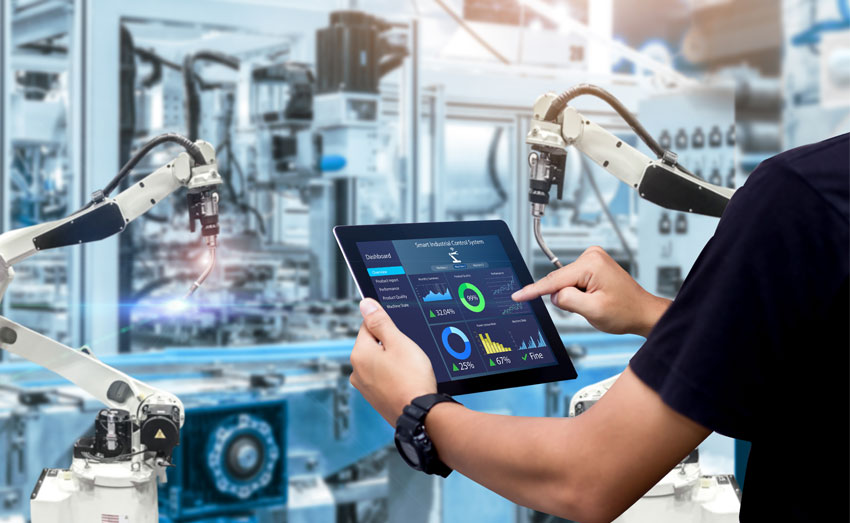
This course is designed for second-cycle students in Industrial Engineering. It introduces the fundamental concepts of information systems in an industrial context, with a focus on their role in managing, controlling, and supporting the digital transformation of production systems.
The course is structured into three main parts. The first part presents the general concepts of information systems, including their components and their growing importance in industrial organizations. The second part focuses on Enterprise Resource Planning (ERP) systems, with particular emphasis on Odoo, an open-source solution widely used for integrating business processes. The third part covers modeling using the Unified Modeling Language (UML), an essential tool for designing and representing information systems.
The objective of this course is to provide students with both solid theoretical foundations and practical tools to analyze and model industrial information systems. It also raises awareness of Industry 4.0 challenges, where information plays a key role in performance and innovation.
- Teacher: Imen Kouloughli